Laser Treatment for Hemorrhoids
Laser treatment for hemorrhoids, also known as laser hemorrhoidoplasty (LHP), is a minimally invasive, day-care procedure designed to treat internal hemorrhoids with precision and minimal discomfort. Dr. Pravin Goykar offers this advanced treatment as part of his comprehensive proctology and surgical care services.
What Are Hemorrhoids?
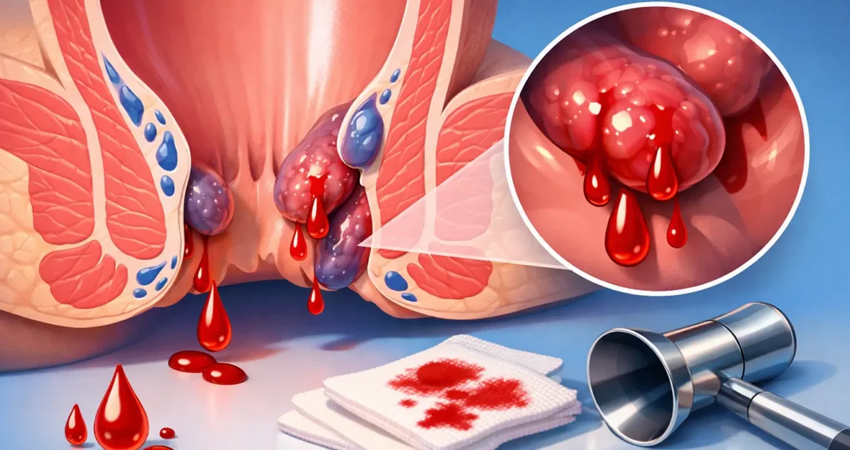
Hemorrhoids (piles) are swollen and inflamed veins in the rectum or around the anus that can cause pain, discomfort, and bleeding. They are classified as internal (inside the rectum) or external (under the skin around the anus). Hemorrhoids are extremely common and are often caused by straining during bowel movements, chronic constipation, or prolonged sitting.
What Is Laser Hemorrhoidoplasty?
Laser hemorrhoidoplasty is a procedure in which a laser fibre is inserted into the hemorrhoidal tissue. The controlled laser energy causes the hemorrhoidal mass to shrink by coagulating the blood supply to the tissue, leading to its gradual reduction without the need for excision.
This technique is performed under local or short general anaesthesia and is typically carried out as a day-care procedure, allowing patients to return home the same day.
Conditions Treated
- Grade I, II, and selected Grade III internal hemorrhoids
- Hemorrhoids causing rectal bleeding
- Hemorrhoids associated with prolapse or discomfort
- Recurrent hemorrhoids after conservative management
Benefits of Laser Treatment for Hemorrhoids
Minimally Invasive
No large incisions are required. The laser fibre is introduced through the anal canal, targeting hemorrhoidal tissue precisely.
Day-Care Procedure
Most patients are discharged on the same day, avoiding a prolonged hospital stay.
Reduced Post-Operative Pain
Compared to conventional hemorrhoidectomy, laser treatment is associated with less post-procedural discomfort.
Faster Recovery
Patients are typically able to resume light activities within a few days of the procedure.
Reduced Risk of Complications
The precision of laser energy reduces the risk of damage to surrounding tissue.
What to Expect
Before the procedure, a thorough clinical assessment including proctoscopy is performed to confirm the grade and nature of the hemorrhoids and to determine suitability for laser treatment. The procedure itself is brief, and post-procedure instructions regarding diet, hygiene, and activity restrictions will be provided.
Follow-up appointments are recommended to monitor healing and assess treatment outcomes.
Why Choose Dr. Pravin Goykar?
- Experienced in advanced laser proctology procedures
- Day-care surgical facility with trained support staff
- Individualized assessment and treatment planning
- Focus on patient comfort and minimal recovery time
- Comprehensive pre- and post-operative care