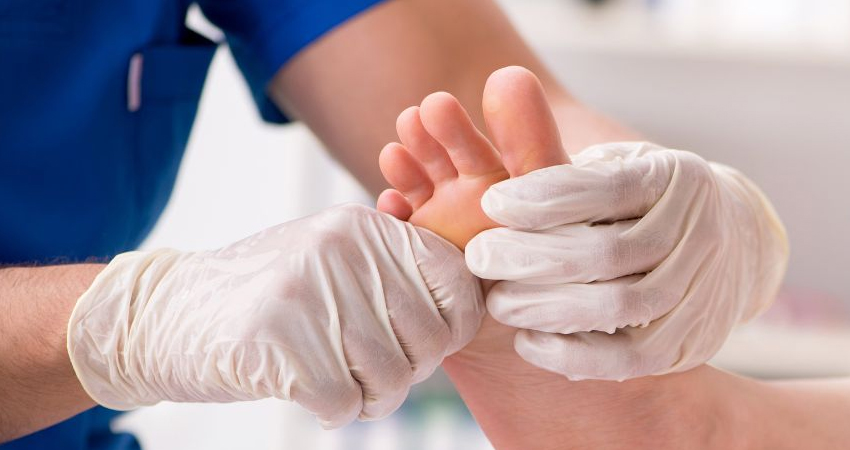
Diabetic Foot Care & Management Including Debridement & Amputation
Diabetes can cause serious complications in the feet due to peripheral neuropathy and poor blood circulation, leading to non-healing ulcers, infections, and in severe cases, gangrene. Dr. Pravin Goykar provides comprehensive diabetic foot care — from preventive assessment and wound management to advanced surgical interventions including debridement and amputation — with the goal of preserving limb function and improving quality of life.
Understanding Diabetic Foot Complications
Diabetic foot disease is one of the most common and serious complications of diabetes. Reduced blood flow (peripheral arterial disease) combined with loss of sensation (peripheral neuropathy) means that injuries or infections can go unnoticed and escalate rapidly. Early detection and prompt surgical management are essential to prevent limb loss.
Conditions Managed
- Diabetic Foot Ulcers – Non-healing wounds on the foot or lower limb due to pressure, trauma, or poor circulation in diabetic patients.
- Infected Diabetic Wounds – Superficial or deep infections requiring surgical drainage, debridement, and appropriate antibiotic therapy.
- Cellulitis & Necrotising Fasciitis – Rapidly spreading soft tissue infections demanding urgent surgical intervention.
- Dry & Wet Gangrene – Tissue death resulting from severely compromised blood supply, often requiring amputation.
- Osteomyelitis – Bone infection secondary to diabetic foot ulcers, managed with debridement or bone resection.
- Charcot Foot – A progressive condition causing deformity in the joints of the foot, requiring specialist surgical assessment.
Surgical Procedures Offered
Wound Debridement
Debridement involves the surgical removal of infected, dead, or non-viable tissue from a diabetic foot wound. This is a critical step in wound healing, as it eliminates the bacterial load and creates a healthy wound bed for subsequent healing or reconstruction. Debridement may be performed as a single procedure or as repeated staged procedures depending on the wound's condition and response to treatment.
- Sharp surgical debridement under local or general anaesthesia
- Removal of necrotic tissue, slough, and infected material
- Wound bed preparation for dressing, grafting, or secondary closure
- Maggot debridement therapy for selected cases
Amputation
When tissue death is extensive or infection has spread beyond salvageable boundaries, amputation may be the most appropriate and life-saving intervention. Dr. Goykar performs amputations at the most limb-preserving level possible, with a focus on functional outcome and rehabilitation potential.
- Toe Amputation – Removal of one or more toes affected by gangrene or severe infection.
- Ray Amputation – Removal of a toe along with the corresponding metatarsal bone.
- Transmetatarsal Amputation – Removal of the forefoot while preserving heel function.
- Below-Knee (BK) Amputation – Performed when infection or gangrene extends above the foot but is limited below the knee.
- Above-Knee (AK) Amputation – Reserved for cases with extensive proximal spread where below-knee salvage is not possible.
Multidisciplinary Approach
Effective diabetic foot management requires close collaboration between the surgeon, diabetologist, vascular surgeon, physiotherapist, and wound care nurse. Dr. Goykar works within a multidisciplinary framework to ensure optimal blood sugar control, vascular assessment, infection management, and post-surgical rehabilitation for every patient.
Post-Operative Care & Wound Management
- Advanced wound dressings to promote healing
- Offloading devices (special footwear, casts) to reduce pressure on healing wounds
- Regular wound reviews and dressing changes
- Physiotherapy and mobility support following amputation
- Long-term diabetic foot surveillance to prevent recurrence
Why Choose Dr. Pravin Goykar?
- Experienced in managing complex diabetic foot infections and wounds
- Limb-preserving surgical philosophy with amputation as a last resort
- Staged debridement approach for optimal wound bed preparation
- Coordinated care with diabetologists and vascular specialists
- Comprehensive post-operative wound care and follow-up
- Patient education on diabetic foot prevention and self-care