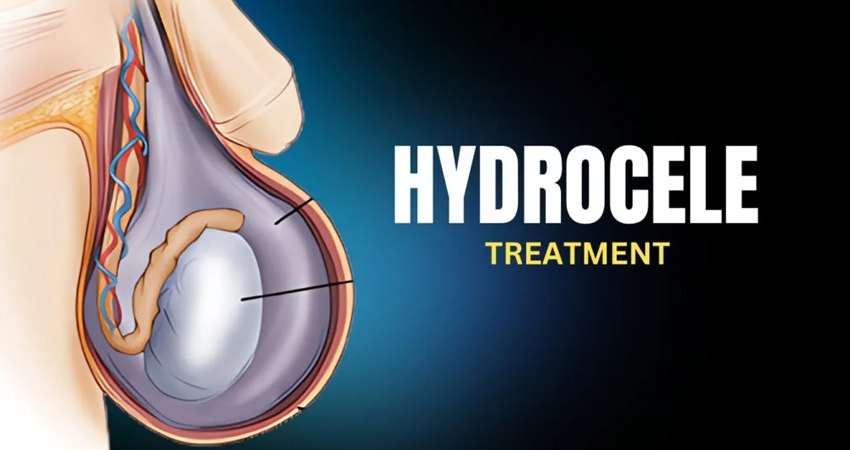
Hydrocele – Surgical Management
A hydrocele is an accumulation of fluid within the scrotal sac surrounding the testicle. It is the most common cause of painless scrotal swelling and can affect males of any age — from newborns to older adults. While most congenital hydroceles in infants resolve spontaneously, symptomatic or persistent hydroceles in older children and adults typically require surgical correction. Dr. Pravin Goykar provides safe and effective hydrocele surgery with excellent outcomes and minimal risk of recurrence.
Types of Hydrocele
- Primary (Idiopathic) Hydrocele – Develops without any identifiable underlying cause; common in adults, often gradual in onset.
- Secondary Hydrocele – Arises as a result of underlying pathology such as infection (epididymo-orchitis), trauma, testicular torsion, or tumour.
- Congenital Hydrocele – Present at birth due to a patent processus vaginalis (a channel between the abdomen and the scrotum); most resolve by 12–18 months of age.
- Communicating Hydrocele – Fluid freely communicates between the peritoneal cavity and the scrotum through a patent processus vaginalis; may change in size throughout the day.
- Non-Communicating Hydrocele – A closed fluid collection with no communication to the peritoneal cavity.
- Hydrocele of the Cord – A fluid-filled cyst along the spermatic cord, separate from the testicle.
Symptoms
- Painless swelling of one or both sides of the scrotum
- A sensation of heaviness or dragging discomfort
- Swelling that may fluctuate in size (communicating hydrocele)
- Transillumination positive (light passes through the swelling)
- Associated symptoms of infection or trauma if secondary
Surgical Treatment
Hydrocelectomy (Jaboulay / Lord's Procedure)
Surgical hydrocelectomy is the definitive treatment for symptomatic hydrocele. Through a small scrotal incision, the hydrocele sac is opened, fluid drained, and the sac either everted (Jaboulay's procedure) or plicated (Lord's procedure) around the testicle to prevent re-accumulation. Both techniques achieve excellent long-term results with a low recurrence rate.
- Jaboulay's Procedure – The hydrocele sac is completely everted behind the testis to prevent re-accumulation of fluid; preferred for large hydroceles.
- Lord's Procedure – The sac is plicated (gathered with sutures) without full eversion; preferred for smaller, thinner-walled hydroceles with lower bleeding risk.
Aspiration & Sclerotherapy
In selected patients unfit for surgery, the hydrocele fluid can be aspirated (drained with a needle) and a sclerosant agent injected to obliterate the sac. This is a less invasive alternative but carries a higher recurrence rate compared to surgical repair and is not suitable for all patients.
Procedure Details
- Performed under spinal or general anaesthesia
- Small scrotal incision with minimal scarring
- Day-care or short-stay procedure
- Absorbable sutures — no suture removal required in most cases
- Scrotal support and analgesics provided post-operatively
Post-Operative Care
- Scrotal support (jockstrap) worn for 2–4 weeks post-surgery
- Mild swelling and bruising are expected and resolve within 2–3 weeks
- Light activities resumed within a few days; strenuous activity avoided for 4–6 weeks
- Follow-up to assess wound healing and scrotal examination
Why Choose Dr. Pravin Goykar?
- Expert surgical management tailored to type and size of hydrocele
- Secondary hydrocele assessed with scrotal ultrasound to exclude underlying pathology
- Day-care surgery available for suitable patients
- Low recurrence rate with precise surgical technique
- Comprehensive post-operative care and wound follow-up